


Looking for a Functional Doctor?
Read this first

There was a time when choosing a doctor was relatively simple. You asked your neighbor. You called the office. You made an appointment.
Today, you open Google and encounter an impressive collection of functional doctors, holistic doctors, longevity specialists, health coaches, hormone gurus, and someone somewhere who can diagnose your thyroid by looking at your aura. Confusing!
So, what exactly is Functional Medicine—and how do you know you're getting the real thing?
Functional Medicine emerged more than 30 years ago from a beautifully simple idea: instead of asking only, “What medication treats this disease?” perhaps we should also ask, “Why did this person develop the problem in the first place?”
The Institute for Functional Medicine (IFM), founded in 1991, became a mothership that helped develop a systems-oriented, patient-centered approach to chronic illness.
In plain English? We look at the whole person.
Your blood pressure matters. But so do your sleep, nutrition, stress, hormones, medications, exercise, gut health, family history, environment, and that mysterious third glass of wine you forgot to mention on your intake form.
Functional Medicine doesn't reject conventional medicine. Quite the opposite. At its best, it adds another layer to it.
Your PCP needs to recognize when fatigue might simply require better sleep—and when it could represent anemia, thyroid disease, sleep apnea, medication side effects, depression, or something considerably less charming. And she should discuss nutrition and exercise while also knowing when you need a statin, an antibiotic, an MRI, or a cardiologist.
Functional Medicine asks, “Why?” Conventional medicine is very good at asking, “What is dangerous right now?”
I want my doctor to ask both.
But there's a catch: The word “functional” is not a medical degree.
It has become enormously popular, and popularity has an unfortunate side effect: everyone wants to join the party.
Fortunately, checking credentials is much easier than investigating your latest romantic prospect.
Go to IFM.org, select “Find a Practitioner,” and read the practitioner's profile carefully. If you are like me and specifically want a Functional Medicine physician as your primary care doctor, make sure the doc is actually an MD or DO.
Additionally, look for the FMCP-M certification credential rather than assuming that appearing in the directory means the doctor is certified.
FMCP-M Certification requires rigorous education and passing a comprehensive examination, rather than attending a weekend seminar and returning Monday morning and calling yourself “functional.” I would also recommend verifying a physician's license independently through your state's medical licensing board.
Finally, ask whether the Functional doc can actually serve as your primary care doctor rather than simply consulting visit by visit. For me, this is the best and most powerful combination.
You get someone trained to diagnose disease, prescribe medications, interpret imaging, recognize emergencies, and coordinate specialty care—but who is also willing to spend time thinking about nutrition, metabolic health, sleep, stress, exercise, hormones, environmental exposures, and prevention. In other words, the goal isn't alternative medicine. It is better-integrated medicine.
Perhaps the best doctor isn't the one carrying the largest prescription pad—or the largest suitcase of supplements.
Perhaps it's the one who knows when you need either one.
And, more importantly, when you need neither.
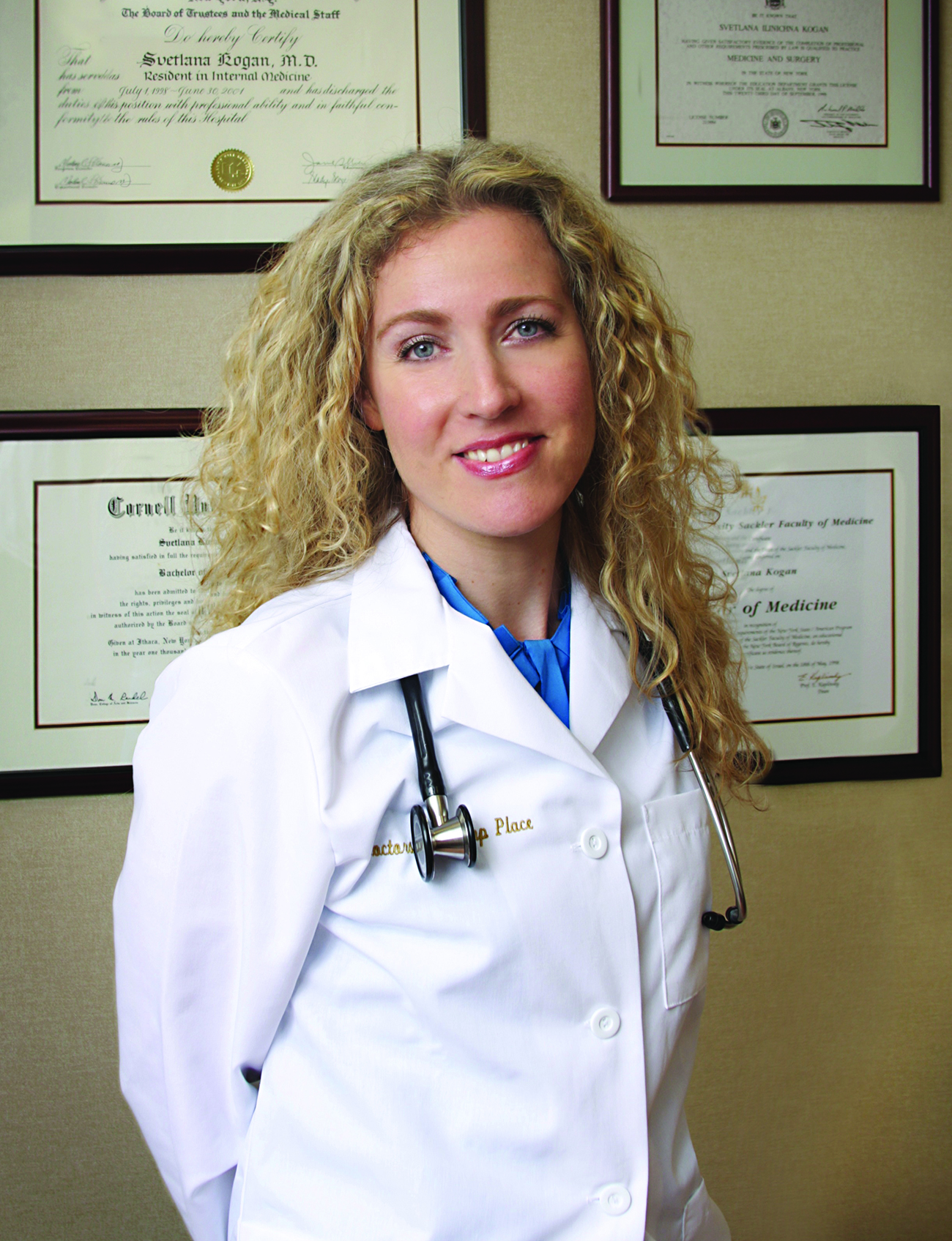
The author of Diet Slave No More!, Svetlana Kogan, MD, IFMCP is a
Board-Certified Internal Medicine, Holistic & Functional Medical Doctor with over
25 years of experience.
Dr. Kogan
M.D., IFMCP
239.676.6883
720 5th Ave S • #209, Naples, FL 34102


Comments